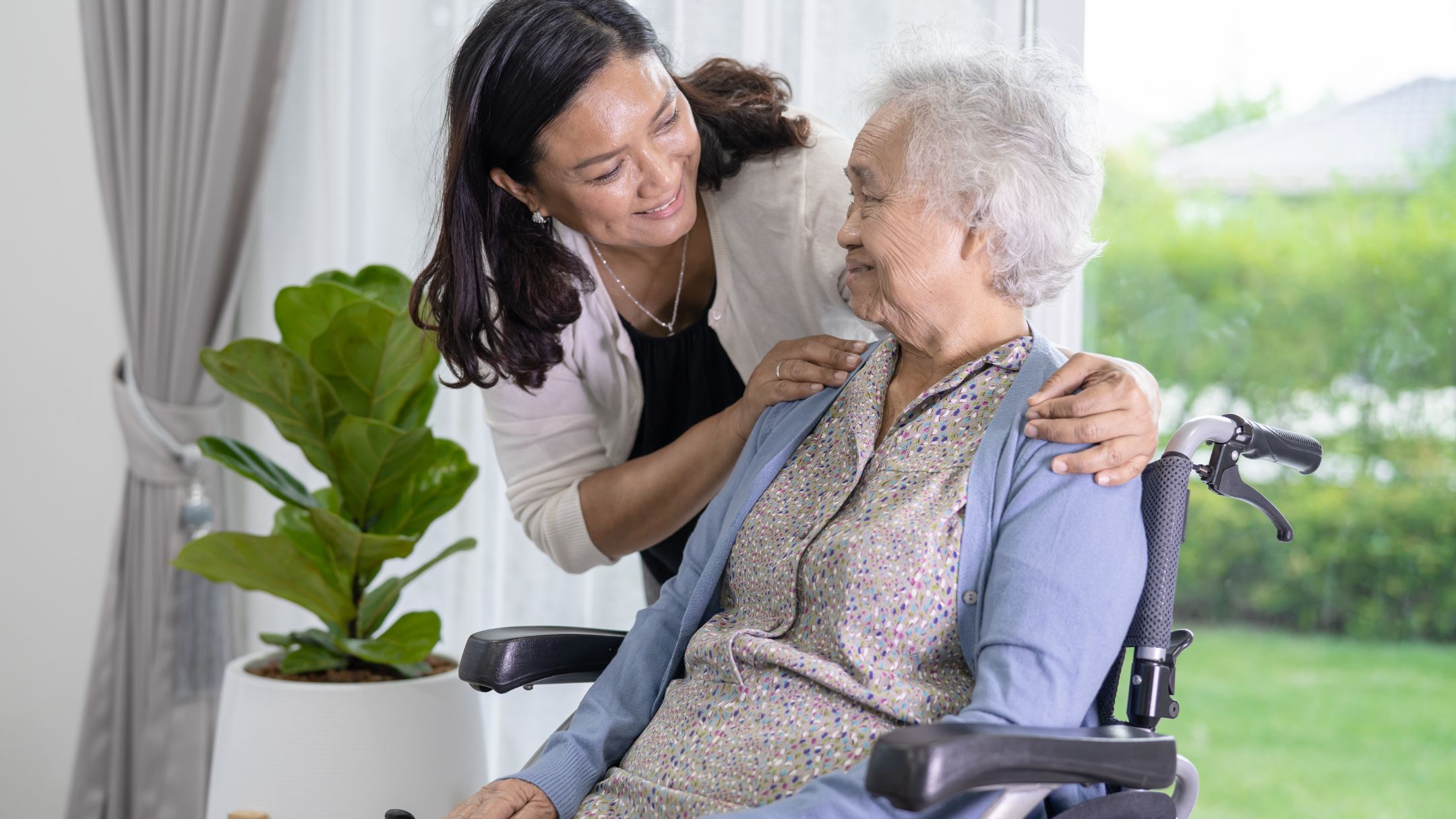
There's often a moment families describe in the same way: you notice your parent moving more carefully, gripping the counter when they stand, or quietly skipping activities they used to enjoy. Mobility changes in older adults tend to arrive gradually, which makes them easy to dismiss — until the cumulative effect becomes hard to ignore.
If your parent is finding it harder to get around the house, reduced mobility isn't just a physical issue. It reshapes their entire day — what they eat, how often they leave home, how connected they feel, and how safe they are when no one is watching. Understanding what's happening, and knowing what genuinely helps, can make a significant difference for the whole family.
Why Mobility Changes Matter More Than They Appear
Limited mobility tends to trigger a quiet chain reaction. When getting to the kitchen feels like an effort, eating becomes irregular. When the front steps feel risky, outings stop. When outings stop, social contact drops. And when social contact drops, mood, appetite, and cognitive engagement often follow.
Research consistently links reduced physical activity in older adults to faster functional decline — not because of age alone, but because the sedentary habits that come with mobility limitations compound over time. Families who step in early, with practical and consistent support, can help slow that process considerably.
Common Causes of Mobility Decline in Older Adults
It helps to understand what's driving the change, both so you can have informed conversations with your parent's physician and so you can tailor support appropriately. Common contributors include:
- Arthritis and joint pain — stiffness and inflammation make movement unpredictable and often discouraging
- Balance and vestibular issues — inner-ear changes, blood-pressure fluctuations, and certain medications can all affect steadiness
- Muscle weakness — sarcopenia (age-related muscle loss) often goes unnoticed until a fall or near-miss brings it to light
- Neurological conditions — Parkinson's disease, post-stroke effects, and peripheral neuropathy all affect gait and coordination
- Fear of falling — sometimes the biggest barrier isn't physical at all; a previous fall or near-miss can make a parent reluctant to move, which accelerates deconditioning
Your parent's GP or a geriatrician can help identify what's at play and whether physiotherapy, medication adjustment, or mobility aids might help. That medical piece is the foundation — but daily life still needs managing around it.
What Day-to-Day Life Looks Like When Mobility Declines
For families who don't live with their parent, it can be hard to picture how mobility limitations play out hour by hour. A few common patterns worth knowing about:
- Meals become simpler — or disappear. Standing at the stove becomes exhausting or unsafe, so parents default to crackers, tinned goods, or simply skipping meals.
- Personal care gets skipped. A shower that requires balance and confidence can become something to avoid. Laundry piles up. Getting dressed takes twice as long.
- The living space shrinks. Parents may stop going upstairs, stop using certain rooms, or stop going outside altogether — not because they want to, but because it feels too risky alone.
- Appointments get missed. If driving is no longer possible and transit is difficult, medical and social commitments start falling away.
How In-Home Companion Care Can Help
For many Ontario families, a consistent in-home companion is one of the most practical ways to fill the gaps that mobility decline creates — without uprooting a parent from the home they love.
A good companion caregiver doesn't replace medical care, but they do handle the everyday texture of a parent's life: preparing meals that are nutritious and appealing, helping with light tasks around the house, accompanying your parent to appointments or errands, offering a steady presence so that mornings and evenings feel manageable rather than daunting.
Crucially, consistency matters enormously when mobility is limited. A familiar face who knows your parent's routine, preferences, and physical limits is far more reassuring than a rotation of strangers. Over time, a trusted caregiver becomes someone your parent actually looks forward to seeing — which, when getting out is harder, becomes a meaningful source of social connection in itself.
Family members also benefit from the peace of mind that comes from regular updates. Knowing that someone reliable was there on Tuesday — that your parent ate a proper lunch, made it to their GP appointment, and seemed in good spirits — changes the quality of your week, too.
Practical Steps Families Can Take Now
If you're noticing mobility changes in your parent, a few things worth doing in the near term:
- Book a conversation with their GP to flag what you're observing — behavioural changes at home are useful clinical information
- Do a quiet walkthrough of their home: are pathways clear, rugs secured, lighting adequate, grab bars in the bathroom? Small changes reduce big risks
- Talk to your parent about what parts of the day feel hardest — their answer may surprise you, and it's the right starting point for any support plan
- Look into what in-home support might look like, so you have options ready rather than scrambling after a crisis
If you're exploring what consistent companion care might look like for your family across the GTA or York Region, Hearthlane is launching in 2026 — and you're welcome to join the waitlist to be among the first families we connect with.
A Note on Keeping the Conversation Gentle
Parents with mobility challenges often feel a complicated mix of frustration and embarrassment about needing more help. Framing support as practical and matter-of-fact — rather than as a response to decline — tends to land much better. "I thought it might be nice to have someone come by to help with a few things" is a very different conversation than "I'm worried you're not managing." The goal is preserving dignity and autonomy, with just enough support to make independence genuinely sustainable.
When that balance is right, many families find their parent is not just safer at home — they're visibly more like themselves again.